February 16, 2026
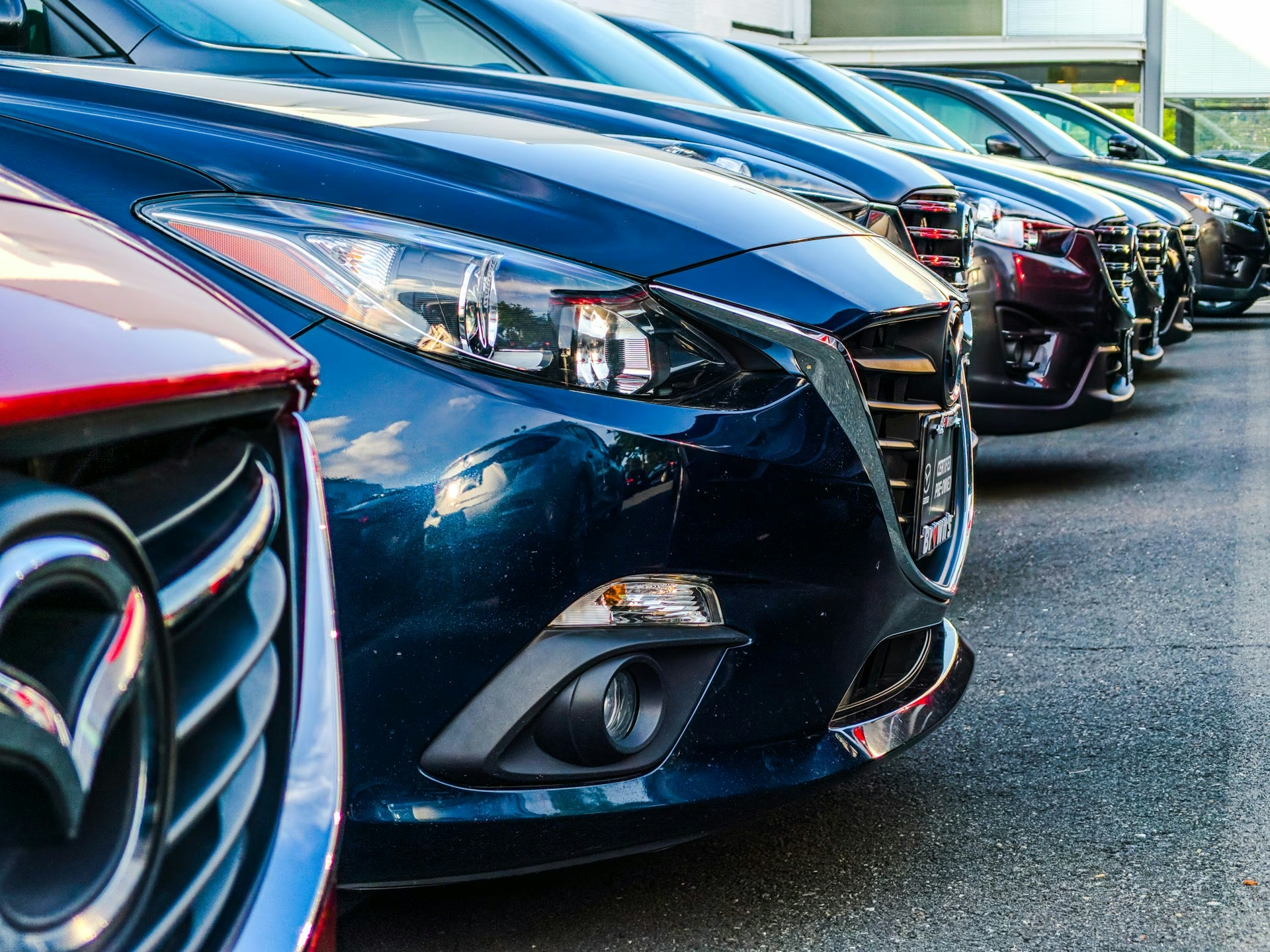
Are you looking to reduce your operational costs while increasing efficiency? Facing rising fuel prices and new regulatory requirements, effective fleet management is no longer optional—it is a necessity to stay competitive. This complete guide reveals the strategies and essential tools to transform your vehicle fleet into a true performance driver.
The best practices presented here are based on rigorous recommendations and apply to both SME fleets and more complex vehicle fleets.
Technology is undoubtedly the backbone of modern fleet management. According to data from the
Technology is undoubtedly the backbone of modern fleet management. According to data from the federal fleet management program, telematics analysis applied to over 5,400 vehicles identified a potential annual reduction of more than 19,000 tonnes of CO₂, along with savings exceeding $15M on total cost of ownership. These results illustrate the concrete impact of decisions based on reliable data.
Telematics tools, which combine GPS geolocation and computerized data transmission, offer unprecedented visibility into your operations. They enable you to collect a wealth of information in real time on each vehicle.
The data collected allows you to monitor driver behavior, analyze fuel consumption, and receive maintenance alerts. To make the right choice of geolocation solution for your fleet, it is essential to evaluate the features offered against your specific needs.
In 2025, fleet management operates in a more demanding context than ever. The sustained rise in operating costs, evolving regulatory frameworks, and increased pressure on environmental performance are forcing organizations to rethink their practices. An approach focused solely on vehicle tracking is no longer sufficient.
Fleet managers must now deal with increased operational complexity: larger data volumes, higher expectations for safety and sustainability, and the need to demonstrate measurable return on investment. In this context, fleet optimization relies on structured decisions, supported by reliable data and aligned with field realities.
Reactive maintenance, which involves repairing breakdowns after they occur, leads to unexpected downtime and often more costly repairs. Preventive maintenance, on the other hand, aims to keep vehicles in perfect working condition to prevent breakdowns.
In practice, organizations that have formalized a preventive maintenance schedule significantly reduce unplanned downtime compared to those that only react to breakdowns.
A well-structured program helps extend the lifespan of your assets and ensure driver safety. Modern fleet management systems can automate maintenance reminders based on mileage or time, greatly simplifying the process for demanding sectors such as the industrial sector.
Maintenance Type | Approach | Impact on Operations | Long-Term Costs |
Preventive | Proactive and planned | Minimized and controlled downtime | Reduced |
Reactive | Reactive and unplanned | Major interruptions and delays | High |
To deepen the analysis and evaluate the optimization levers specific to your vehicle fleet, an external perspective can help structure priorities and guide decisions.
Your drivers are on the front lines of fleet optimization. Their driving behavior has a direct impact on fuel consumption, parts wear, and safety. Eco-driving training is an extremely profitable investment.
This approach includes a set of best practices for smoother, more anticipatory driving. Here are some key tips:
The data collected by your telematics systems is only useful if it is analyzed and turned into concrete actions. Setting up dashboards with key performance indicators (KPIs) is essential to monitor your fleet’s performance.
In many analyzed fleets, a structured reading of data quickly identified underutilized vehicles or driving behaviors generating avoidable costs, where a simple accumulation of indicators provided no decision-making value.
Relevant KPIs include total cost of ownership (TCO), fuel consumption, and fleet utilization rate. This data analysis is crucial for making strategic decisions, such as the optimal time to replace a vehicle or identifying drivers who need additional training. It is an indispensable tool for specialized fields such as animal transportation.
Common Mistakes in Fleet Optimization
Even with powerful tools, certain mistakes frequently occur when optimizing a fleet:
• Focusing only on short-term costs, without considering the impact on safety, sustainability, or overall performance.
• Collecting data without analyzing it, turning telematics into a simple tracking tool rather than a decision-making lever.
• Multiplying performance indicators at the expense of a few truly actionable KPIs.
• Neglecting the human factor by underestimating the importance of driver training and buy-in.
In conclusion, to know how to optimize your fleet management, you must adopt a comprehensive approach. By combining the power of telematics technology, route rationalization, rigorous preventive maintenance, driver training, and relevant data analysis, you can drastically reduce your costs, while also improving the safety, sustainability, and overall efficiency of your operations.
Explore how tailored technological solutions can bring these strategies to life for your business.
To optimize your fleet management, combine three key actions: route optimization to reduce distances, eco-driving training for efficient fuel use, and telematics tracking to correct energy-intensive habits. These three combined actions have a direct and measurable impact on your fleet’s consumption.
The first step is to perform a diagnostic of actual fleet usage. This involves analyzing available data on vehicle utilization, routes, consumption, and associated costs. This comprehensive view allows you to quickly identify action priorities and avoid decisions based on assumptions rather than facts.
Preventive maintenance involves scheduling vehicle maintenance before a breakdown occurs. This proactive approach is crucial because it reduces unexpected downtime and long-term repair costs. It also extends the lifespan of your assets and, most importantly, ensures an optimal level of safety for drivers.
The indicators to prioritize are those that directly influence performance and costs. Total cost of ownership (TCO), fuel consumption, vehicle utilization rate, and maintenance costs form a reliable foundation. Tracking a limited number of truly actionable KPIs facilitates decision-making and improves the overall efficiency of fleet management.

President - Geothentic
Coming from a family of entrepreneurs specializing in the automotive and technology sectors, and being passionate about the environment, it was obvious to me to reconcile these two worlds in order to offer simple and revolutionary technologies for the prosperity of our planet. That's how I founded Géothentic.
 Client access
  Request